
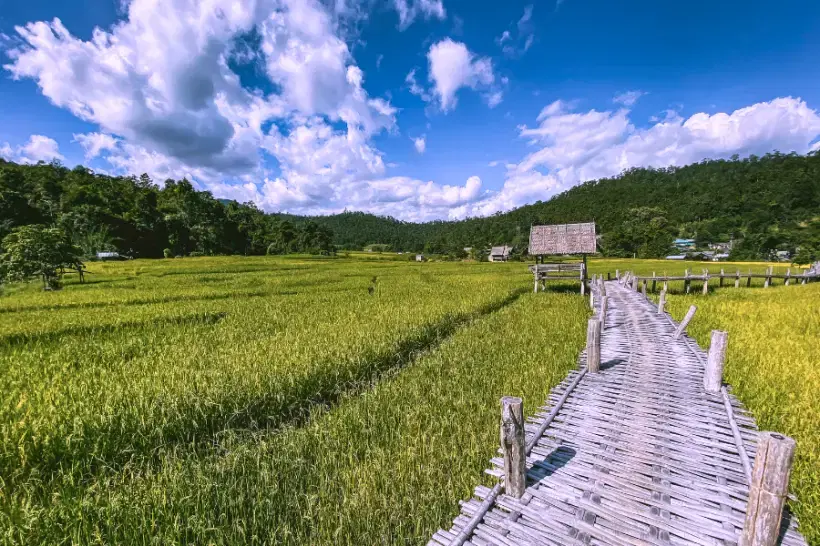

Pai has become one of northern Thailand’s busiest backpacker destinations, but its mountain scenery, cafés, waterfalls, and relaxed atmosphere still make it worthwhile for travelers with realistic expectations in 2026.
Nestled in the mountains of northern Thailand, Pai has transformed from a quiet backpacker hideaway into one of the country’s most recognizable small-town travel destinations. For many first-time visitors planning a northern Thailand itinerary, the same question comes up repeatedly: is Pai now too touristy to enjoy?
transport_list from=”Chiang Mai” to=”Pai”]
The short answer is yes, Pai has become heavily tourism-focused in certain areas, particularly around the town center and major attractions. However, that does not necessarily mean the destination has lost its appeal. The experience largely depends on when you visit, where you stay, and what type of trip you expect.
What Pai Feels Like in 2026
Pai today functions more as a relaxed backpacker and café town than a hidden mountain village. Tourism infrastructure is well developed, especially around the central Walking Street area, where visitors will find:
- Guesthouses and boutique resorts
- Cafés aimed at international travelers
- Night markets and street food stalls
- Bars, live music venues, and cannabis shops
- Scooter rental businesses
- Tour agencies and yoga retreats
During peak season, especially between November and January, the town center can feel busy from afternoon until late evening. Restaurants often fill quickly, and popular viewpoints attract large crowds around sunrise and sunset.
For first-time travelers, this can actually make Pai easier and more comfortable to visit compared to less-developed destinations in northern Thailand. English is widely spoken in tourist areas, and services are simple to arrange once you arrive.
Which Parts Feel Most Touristy?
Certain locations in Pai now experience significant daily visitor traffic, particularly during high season.
Most Crowded Areas
| Attraction | What to Expect |
|---|---|
| Walking Street | Night market atmosphere with bars, food stalls, cafés, and souvenir shops |
| Yun Lai Viewpoint | Large sunrise crowds and photo-focused tourism |
| Pai Canyon | Busy sunset periods with long lines on narrow paths |
| Bamboo Bridges | Curated scenic spots popular for photography |
| Hot Springs | Shared pools with tour groups during peak hours |
Many visitors describe these attractions as visually beautiful but highly commercialized compared to a decade ago.
Social media has also influenced Pai’s tourism growth considerably. Several viewpoints and cafés are now designed specifically around photography and short-form travel content, creating a more curated travel atmosphere than some visitors expect.
What Still Makes Pai Worth Visiting
Despite the crowds, Pai continues to attract travelers because the surrounding landscape remains genuinely impressive. The appeal of the region extends far beyond the main tourist strip.
Many visitors still come for:
- Mountain scenery
- Relaxed pace of life
- Countryside scooter rides
- Waterfalls and hot springs
- Café culture
- Short hiking opportunities
- Sunset viewpoints
- Cooler northern Thailand weather
Outside the central town area, Pai can still feel peaceful, especially in the early morning or when staying near rice fields and mountain valleys instead of the nightlife district.
Travelers who prioritize nature, scenery, and slow travel often enjoy Pai far more than visitors expecting an untouched local village.
When Pai Feels Most Overcrowded
Timing significantly affects the overall experience.
Best Time to Visit Pai
| Season | Conditions | Overall Experience |
|---|---|---|
| November – February | Cool temperatures, clear skies | Best overall season but busiest |
| March – April | Burning season haze and smoke | Poor air quality possible |
| May – October | Green landscapes and rain showers | Quieter with fewer crowds |
The cool season between November and February offers the most pleasant weather, with daytime temperatures typically ranging between 20–28°C. However, this is also when accommodation prices rise and crowds increase.
Burning Season Concerns
From approximately February to April, northern Thailand often experiences agricultural burning and wildfire smoke. During severe periods, visibility drops and air quality can become hazardous.
In some recent years, tourism numbers in Pai declined sharply during heavy smoke periods. Travelers sensitive to air pollution should monitor air quality carefully before visiting during late dry season.
Is Pai Still Good for First-Time Visitors?
For many first-time visitors to northern Thailand, Pai remains an easy and enjoyable destination.
It works particularly well for travelers who want:
- Relaxed mountain scenery
- Easy café culture
- Budget-friendly accommodation
- Social travel atmosphere
- Simple day trips
- Short stays with flexible schedules
Pai may be less suitable for travelers seeking:
- Traditional local-town atmosphere
- Minimal tourism
- Luxury travel experiences
- Cultural immersion away from foreign visitors
- Quiet nightlife-free environments
The destination now caters heavily to international tourism, particularly backpackers, digital nomads, and younger independent travelers.
How Long Should You Stay?
For most travelers, 2–4 nights is the ideal amount of time in Pai.
Suggested Stay Length
| Trip Style | Recommended Stay |
|---|---|
| Quick Northern Thailand Loop | 2 nights |
| Relaxed Scenic Stay | 3–4 nights |
| Remote Nature Focus | Consider nearby alternatives |
Longer stays can work for travelers who enjoy slow routines, cafés, and mountain scenery, but many first-time visitors find a few days sufficient.
Average Travel Costs in Pai (2026)
Pai still remains relatively affordable compared to southern Thailand destinations.
| Expense | Typical Cost |
|---|---|
| Hostel Bed | THB 250–500 |
| Budget Guesthouse | THB 600–1,200 |
| Boutique Hotel | THB 1,500–3,500 |
| Scooter Rental | THB 100–250 per day |
| Local Meal | THB 60–150 |
| Café Drink | THB 70–140 |
Prices increase noticeably during peak cool season and holiday periods.
Final Verdict: Is Pai Too Touristy?
Pai is undeniably touristy in 2026, particularly in the town center and at major attractions. The destination no longer feels like a hidden mountain secret.
However, that does not automatically make it disappointing.
For travelers who enjoy scenic landscapes, relaxed cafés, social energy, and accessible nature experiences, Pai still offers a rewarding northern Thailand escape. Expectations simply need to match reality.
Visitors looking for an untouched local town may find Pai overly commercialized, while first-time travelers often appreciate the convenience and atmosphere the town provides.
The best approach is to treat Pai as a popular scenic base rather than an undiscovered village. With realistic expectations and careful timing, it can still be one of northern Thailand’s most enjoyable short trips.
FAQs
1. Is Pai overcrowded all year?
No. Pai is busiest between November and February. The rainy season from May to October is generally much quieter.
2. How many days should first-time visitors spend in Pai?
Most travelers find 2–4 nights ideal for sightseeing, cafés, waterfalls, and scenic drives.
3. Is Pai suitable for families?
Yes, although the town is more backpacker-oriented than family-focused. Families often prefer staying outside the nightlife area.
4. Is Pai expensive in 2026?
Pai remains relatively affordable. Budget travelers can still visit comfortably on moderate daily costs.
5. What is the biggest downside of visiting Pai?
The main complaints are tourist crowds, nightlife noise in central areas, and poor air quality during burning season.
6. When should travelers avoid Pai?
Late February through April can bring severe smoke and haze conditions due to agricultural burning.
7. Does Pai still feel authentic?
Some countryside areas still feel peaceful, but the town center is strongly tourism-oriented.
8. Is Pai Canyon worth visiting despite the crowds?
Yes. The scenery remains impressive, especially during sunset, although visitors should expect crowds during peak hours.
9. Is Pai better than Chiang Mai?
They offer different experiences. Chiang Mai is a larger cultural city, while Pai focuses more on scenery, cafés, and a slower pace.
10. Are there less touristy alternatives to Pai?
Yes. Destinations such as Chiang Dao and Nan are often considered quieter alternatives in northern Thailand.
For a Complete Travel Guide
For more detailed information on transportation options, booking tips, itinerary suggestions, and everything you need to know about planning your trip, visit our full guide:
