

Krabi to Koh Samui is easy to navigate with three main options: fly for speed, take a bus and ferry for value, or travel independently for flexibility. Compare journey times, costs, ferry routes, and practical tips.
Traveling from Krabi to Koh Samui is relatively straightforward, but the best route depends on whether you value speed, price, or flexibility. Although the two destinations are only a few hundred kilometres apart, the journey involves crossing from Thailand’s Andaman coast to the Gulf of Thailand.
For most travelers, a combined bus-and-ferry journey offers the best balance of price and convenience. Flying is considerably faster and can make sense for a short holiday, while arranging separate buses and ferries is mainly worthwhile for travelers who want greater flexibility.
Krabi to Koh Samui at a glance
| Option | Approx. journey time | Typical cost | Best for |
|---|---|---|---|
| Flight | Around 1 hour flying time; about 3–4 hours door to door | From about THB 2,800–6,000+ | Travelers short on time |
| Combined bus + ferry | About 5–7 hours | About THB 900–1,500 | Most travelers |
| Bus + separate ferry | About 6–9 hours | About THB 700–1,300 | Budget travelers |
| Private transfer + ferry | About 5–7 hours | Usually THB 4,000+ per vehicle | Families and groups |
Fares vary according to travel date, departure point, ferry type, accommodation location, and season. Treat the figures above as planning ranges rather than fixed prices.
1. Fly from Krabi to Koh Samui
Flying is the fastest way to travel between the two islands. Bangkok Airways operates the direct Krabi–Samui route, and its current fare information lists Krabi–Samui from THB 2,575 one way before any date-specific fare changes or promotions.
The flight itself takes roughly one hour, but the real advantage is the amount of travel time saved. Once airport transfers and check-in are included, allow around three to four hours from a hotel in Krabi or Ao Nang to a hotel on Samui.
What to consider
You will need to allow time for:
- Transfer from Ao Nang or Krabi Town to Krabi International Airport.
- Airport check-in and security.
- The flight to Samui.
- Transfer from Samui Airport to your accommodation.
Krabi Airport is approximately 25–30 km from Ao Nang, while Samui Airport is close to the island’s main tourist areas.
Flying is particularly attractive if you have only a few days on Samui. It can also be worthwhile for families or travelers carrying substantial luggage.
Best choice if: your priority is saving time rather than money.
2. Bus and ferry: the best balance of price and convenience
For most travelers, the most practical alternative to flying is a combined bus-and-ferry ticket.
The journey generally involves a minivan or bus from Krabi to the mainland ferry terminal around Donsak in Surat Thani Province, followed by a ferry to Koh Samui. Depending on the service and connection, the complete journey usually takes around five to seven hours.
The advantage is simplicity: the road and ferry sections are coordinated as a single journey, so you do not have to organize each connection independently.
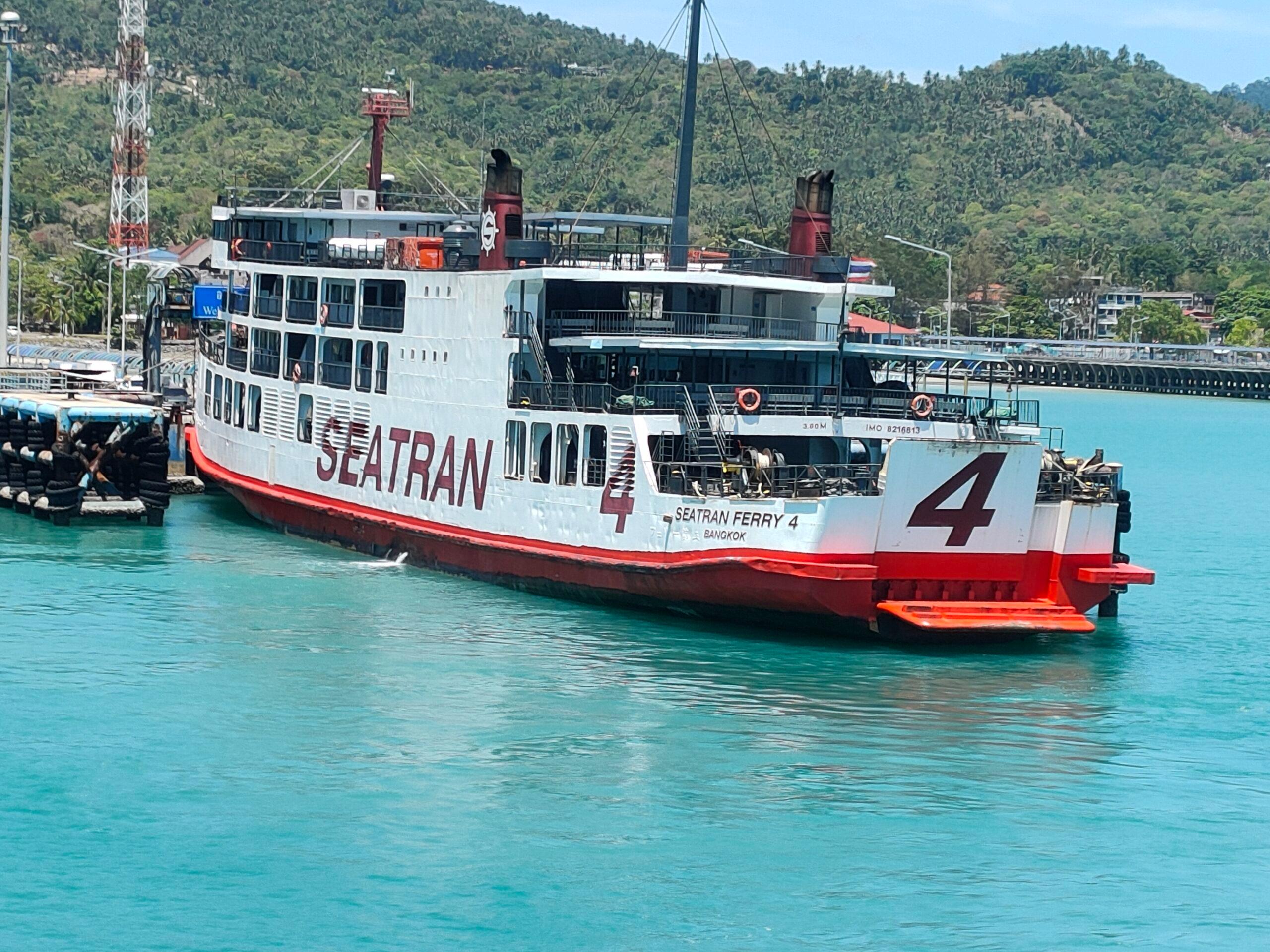
High-speed ferry services operate on routes connecting the mainland with Samui, while conventional car ferries also serve the Donsak–Samui crossing. Current ferry schedules show crossings of approximately 1.5 hours, with both Raja Ferry and Seatran listing Donsak–Samui services.
Typical route
Krabi → Donsak Pier → Koh Samui
The ferry may arrive at different piers depending on the operator. Raja Ferry, for example, operates to Lipa Noi on Samui, while Seatran operates to Nathon.
This is important when choosing accommodation. A hotel in Chaweng or Bophut will require additional transport after you leave the ferry.
Best choice if: you want a reasonable price without the hassle of arranging several separate connections.
3. Bus to Surat Thani or Donsak, then take a ferry
Independent travelers can arrange the road and ferry portions separately.
One possible itinerary is:
Krabi → Surat Thani → Donsak Pier → Koh Samui
Another is to travel directly toward Donsak and connect with a ferry there.
This approach can sometimes reduce the total fare, particularly for travelers who find inexpensive local transport. However, the saving may be relatively small after adding transport between stations and the pier.
Advantages
- More flexibility over departure times.
- Potentially lower cost.
- Useful if you want to spend time in Surat Thani.
- Convenient for travelers continuing to Koh Phangan or Koh Tao.
Disadvantages
- More transfers.
- Longer overall journey.
- Greater risk if the first bus is delayed.
- Separate tickets mean one operator may not be responsible if you miss the next connection.
For example, Raja Ferry currently lists the Donsak–Lipa Noi crossing at THB 200 per passenger, with a scheduled crossing time of about 1.5 hours. Seatran also lists a 1.5-hour Donsak–Nathon crossing at THB 200.
The ferry itself is therefore relatively inexpensive; the larger cost comes from getting from Krabi to Donsak.
Best choice if: keeping costs low and having control over your itinerary matter more than convenience.
4. Private car or taxi plus ferry
A private vehicle can take you from Krabi directly to Donsak Pier, where you continue to Samui by ferry.
This is considerably more expensive than a shared bus-and-ferry service, but it can make sense for families, groups, or travelers with large amounts of luggage.
It also eliminates the need to travel to a bus station and makes the journey more comfortable.
A private transfer is particularly useful when several people are sharing the vehicle because the cost can be divided among passengers.
Best choice if: comfort, privacy, and door-to-door transport are more important than price.
Which ferry should you take?
There are several ferry operators serving the mainland–Samui crossing.
Lomprayah
Lomprayah focuses on high-speed catamaran services and operates routes across the Gulf of Thailand. Its 2026 timetable includes services connecting Samui, Phangan and Koh Tao with the mainland.
The main advantage is speed. However, high-speed catamarans can feel rougher in poor sea conditions, so passengers prone to seasickness may prefer a larger conventional ferry.
Raja Ferry
Raja Ferry operates conventional vehicle ferries between Donsak and Lipa Noi on Koh Samui. Its current published passenger fare is THB 200 one way, with the crossing scheduled at approximately 1 hour 30 minutes.
These ferries are particularly useful for travelers bringing vehicles or those who prefer a larger conventional vessel.
Seatran Ferry
Seatran operates between Donsak and Nathon Pier on Koh Samui. Its current schedule shows a crossing time of approximately 1 hour 30 minutes and a passenger fare of THB 200.
The choice between ferry operators often comes down to departure time, arrival pier, vehicle requirements, and whether you prefer a high-speed catamaran or conventional ferry.
Which option is cheapest?
If price is the main consideration, traveling by road and ferry is generally cheaper than flying.
A self-arranged bus-and-ferry itinerary can potentially cost around THB 700–1,300, while a combined through service is more likely to fall around THB 900–1,500.
However, the cheapest advertised fare is not always the cheapest practical journey. Consider the cost of:
- Getting to the departure point in Krabi.
- Transport between Surat Thani and Donsak if traveling independently.
- Food and drinks during a long journey.
- Transport from the Samui ferry pier to your hotel.
For many travelers, paying slightly more for a coordinated journey is worthwhile.
Which option is fastest?
Flying is clearly the fastest.
A direct flight takes roughly an hour, compared with approximately five to seven hours for a combined road-and-ferry journey.
However, the difference is smaller than the flight time alone suggests. You still need to travel to Krabi Airport, arrive before departure, collect luggage, and travel from Samui Airport to your hotel.
If your accommodation is in Ao Nang and your Samui hotel is close to the airport, flying is particularly convenient. If you are staying far from either airport, the time advantage becomes less significant.
What about the weather?
Weather can affect ferry services, particularly during periods of rough seas.
The Andaman coast around Krabi and the Gulf of Thailand around Samui have different seasonal weather patterns, so conditions are not always identical on both sides of the peninsula.
If you are traveling during a period when rough seas are possible, avoid planning an important flight or international connection immediately after a ferry journey. A little flexibility can make the trip considerably less stressful.
Where will you arrive on Koh Samui?
Your arrival pier matters more than many first-time visitors expect.
Common ferry arrival points include:
- Nathon Pier: on the west coast of Koh Samui.
- Lipa Noi: also on the west side of the island.
- Other terminals: depending on the ferry operator and route.
From these piers, you may need another 30–60 minutes to reach popular areas such as Chaweng, Lamai, Bophut or Fisherman’s Village, depending on traffic.
Check the arrival pier before booking accommodation transfers.
How to make the journey easier
A few simple choices can make a long travel day much more comfortable:
- Leave Krabi early if you want to reach Samui with time left in the afternoon.
- Confirm exactly where your bus or minivan departs.
- Check which Samui pier your ferry uses.
- Leave enough time between separately booked connections.
- Keep valuables and essential medication in your hand luggage.
- Bring water and a light snack for the road and ferry.
- If you suffer from seasickness, consider medication before boarding rather than waiting until symptoms begin.
- Avoid scheduling an important flight immediately after a ferry journey.
Krabi to Koh Samui: which option should you choose?
For most travelers, the decision is simple:
Choose a flight if you want to maximize your time on Koh Samui.
Choose a combined bus and ferry if you want the best overall balance of cost, convenience, and travel time.
Choose separate bus and ferry tickets if you are a confident independent traveler and want maximum flexibility.
Choose a private transfer and ferry if you are traveling as a group and value comfort and door-to-door service.
For a typical holiday, the combined bus-and-ferry option remains the most practical choice. It costs substantially less than flying while avoiding many of the complications associated with organizing separate road and ferry connections.
Final recommendation
The best route depends on the value you place on your time.
If your Koh Samui stay is short, flying is usually worth considering. Bangkok Airways currently publishes a Krabi–Samui fare from THB 2,575 before date-specific pricing and promotions, making it worth checking the flight price before automatically choosing the ferry.
For longer holidays, a combined bus-and-ferry journey is usually the more economical choice. The journey takes most of a day, but it is straightforward and significantly cheaper.
If you are traveling independently and want to keep the cost as low as possible, separate road and ferry tickets can work well, provided you allow plenty of time between connections.
10 Frequently Asked Questions
1. How long does it take to travel from Krabi to Koh Samui?
A direct flight takes roughly one hour in the air, while a combined bus-and-ferry journey generally takes around five to seven hours. A self-arranged journey can take six to nine hours depending on connections.
2. Is there a direct flight from Krabi to Koh Samui?
Yes. Bangkok Airways operates the direct Krabi–Samui route, although the number of flights can vary by date and season.
3. How much does a flight from Krabi to Koh Samui cost?
Bangkok Airways currently publishes a Krabi–Samui fare from THB 2,575 one way under its listed fare structure. Actual prices can be higher depending on the travel date, availability, and fare class.
4. How much is the ferry from Donsak to Koh Samui?
Raja Ferry currently lists a passenger fare of THB 200 for Donsak–Lipa Noi, while Seatran lists THB 200 for Donsak–Nathon. Both publish crossings of approximately 1 hour 30 minutes.
5. Is the bus and ferry option cheaper than flying?
Yes, in most cases. A combined road-and-ferry journey typically costs around THB 900–1,500, although prices vary according to the operator, departure point and date.
6. Can I travel from Krabi to Koh Samui without booking a combined ticket?
Yes. You can arrange a bus or minivan to Surat Thani or Donsak and then purchase a separate ferry ticket. This offers more flexibility but requires more planning.
7. Which ferry pier does the boat arrive at on Koh Samui?
It depends on the operator. Raja Ferry serves Lipa Noi, while Seatran serves Nathon. Check the arrival pier before arranging your hotel transfer.
8. Is it better to fly or take the ferry from Krabi to Koh Samui?
Flying is better when time is limited. The ferry and bus combination is better for travelers who want to save money and do not mind spending several hours traveling.
9. Should I book the bus and ferry separately?
Only if you specifically want flexibility or a potentially lower fare. For a straightforward Krabi-to-Samui journey, a coordinated through service is generally easier because the connections are arranged together.
10. Can bad weather cancel or delay the ferry?
Yes. Rough sea conditions can affect ferry departures. During periods of unsettled weather, allow extra time and avoid connecting the ferry journey directly to an important flight.
For a Complete Travel Guide
For more detailed information on transportation options, booking tips, itinerary suggestions, and everything you need to know about planning your trip, visit our full guide:
